

2025-09-15
Precautions for Using a Hand-Cranked Winch:- Regular Inspection: Before use, check the steel wire rope/cable for any broken wires or wear, ensure all connections are secure, and that the braking funct
Learn More>>
2025-09-11
A typical heavy-duty manual winch usually consists of the following parts:· Robust frame: The main structural component that supports all the internal components subjected to stress.· Input shaft and
Learn More>>
2025-09-10
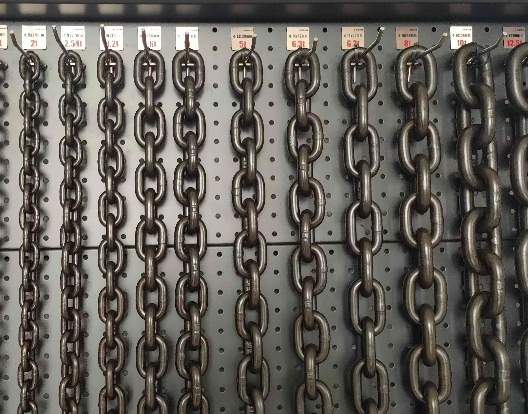
The original color of the lifting chain: The process principle is that after heat treatment (quenching + tempering), only surface cleaning is carried out without any anti-corrosion treatment. Appearan
Learn More>>

2025-09-09
Why must there be a margin of safety? Dynamic loads and impact loads · When calculating the required lifting capacity, you usually consider the static weight of the object. · However, during the actua
Learn More>>
2025-09-08
Common surface treatments for lifting chains include the following: 1. Blackening treatment (Bluing treatment) This is a very common and economical method of surface treatment. · Process principle: A
Learn More>>

2025-09-05
The braking system of the hand chain hoist:- Friction plates: Installed near the gear shaft, they bear the pressure brought by heavy objects.- Brake seat (or brake): When a heavy object tends to fall,
Learn More>>

2025-09-04
Screw Jack: Standard Body vs. Short Body - The standard body (standard model) screw jack and the short body (compact model) screw jack have the same lifting force. The difference lies in their height
Learn More>>
2025-09-03
20mm lifting chain as a component for use with hoisting rigging, the 20mm chain must be connected with matching high-strength components: · Hooks: must be lifting hooks rated to match the chain load,
Learn More>>