

2026-07-28
① Check before starting up: Touch the steel wire rope to ensure there are no broken strands, press the limit switch, and inspect the safety latch of the hook. Before operating, check the steel wire ro
Learn More>>
2026-07-27
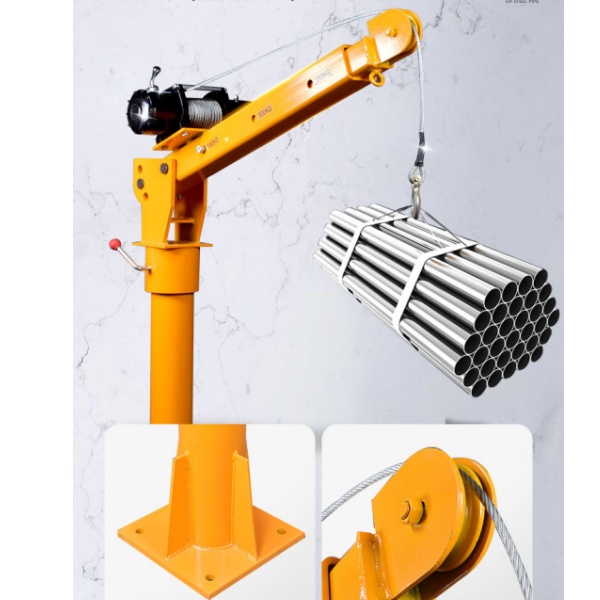
Power supply directly from the vehicle, no worries in outdoor areas: It is driven by the vehicle’s built-in 12V or 24V DC power source, and the lifting mechanism can be easily controlled via a remote
Learn More>>
2026-07-24
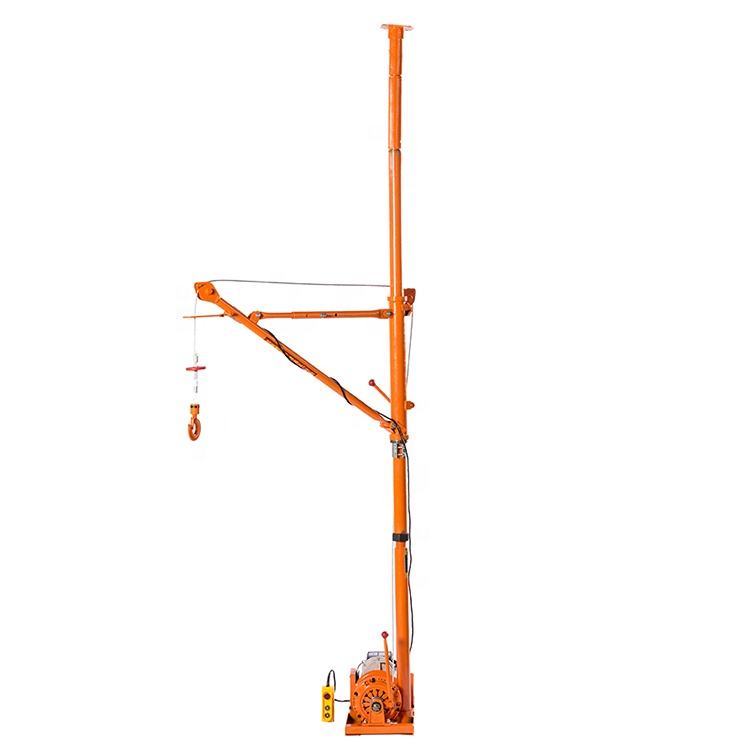
The building doesn’t have an elevator; so a box of tiles, a few bags of cement, and an entire set of window frames all have to be carried by hand. The neighbor injured his back after moving those item
Learn More>>
2026-07-21
A small cantilever crane is a lightweight lifting device that is ideal for transporting materials over short distances and with high frequency in factories, workshops, warehouses and other similar loc
Learn More>>
2026-07-20
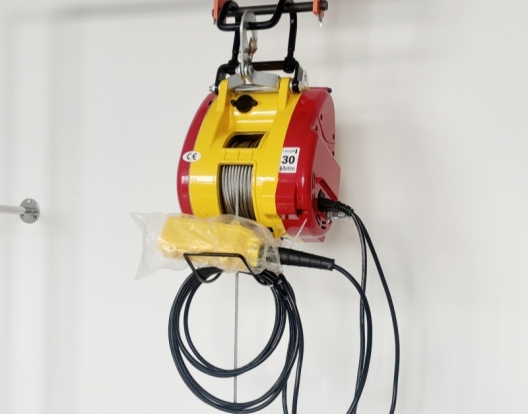
Preparations before use · Overloading is strictly prohibited: Select a hook with an appropriate capacity based on the weight of the load. · Thorough inspection: Ensure that all components are in good
Learn More>>
2026-07-17
"Do you usually have a headache when carrying heavy objects? It's tiring, slow and unsafe. · One: It's light and can be used everywhere. The whole machine is very small and light, and can be easily li
Learn More>>

2026-07-16
The whole machine is small in size, light in weight and very easy to carry.Not only can it be lifted vertically, but it can also be towed horizontally, tilted, and even in a zigzag manner. It is widel
Learn More>>
2026-07-14
Small truck-mounted crane· Clarify needs: Based on the weight of the goods, select a model with sufficient margin for the rated lifting capacity. · Consider power: 12V/24V for commonly used vehicle ba
Learn More>>