
2026-03-09
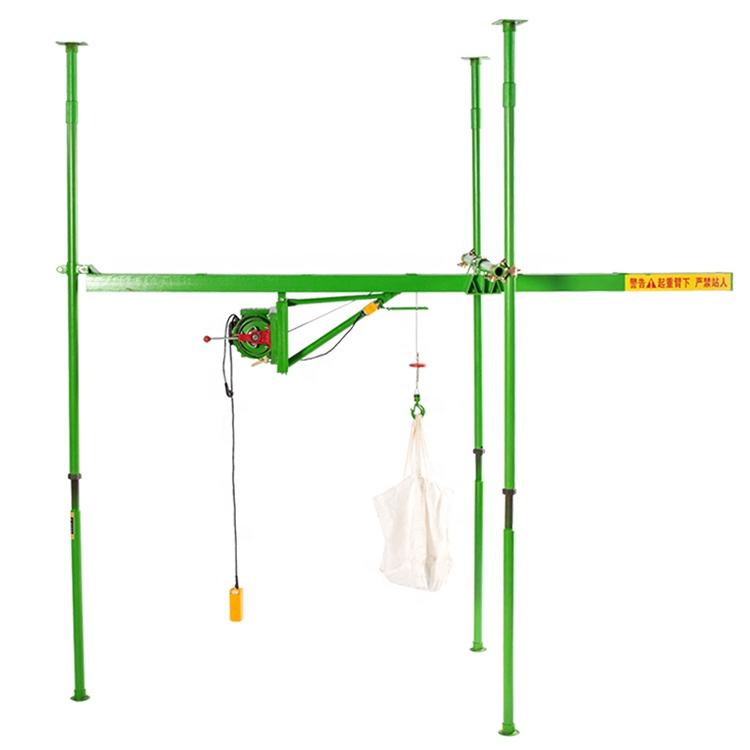
Three pillars core advantages· No weight design: relying on the three-column structure to support the sky and the ground, eliminating the trouble of handling sandbags. · Suitable for small windows: th
Learn More>>

2026-03-06
Wall cantilever crane selection and installation pointsTo choose and install a suitable wall-mounted cantilever crane, these aspects need to be focused on:1. Wall load-bearing capacity: This is a key
Learn More>>

2026-03-05
1. Confirm the lifting point: The fixed point must be able to withstand the weight of the rated load multiplied by 2 (that is, the safety factor is 2), and it must be located directly above the heavy
Learn More>>
2026-03-04
The core difference between manual cantilever cranes and electric cantilever cranes lies in the lifting power, which brings about differences in operation and cost. Here are the key comparisons for yo
Learn More>>

2026-03-03
Wrench hoist slippage fault repairSlippage is a common problem, usually caused by wear and tear of internal components. * Diagnostic inspection: First check for obvious damage to the outside, and manu
Learn More>>
2026-03-02
· Depending on the purpose: if it is a horizontal traction device (similar to the previous cantilever crane to move heavy objects), a pull-on ratchet wire tensioner is the most suitable. If it is a po
Learn More>>
2026-02-28
200kg cantilever crane1. Lifting height: How high does it need to be hoisted? Common 2-5 meters can be customized. 2. Radius of rotation: How long is the arm length? Refers to the horizontal distance
Learn More>>
2026-02-27
Quick overview of cantilever crane parameters, typical range/value description of parameter types, common specifications with rated lifting weight of 125 kg-3000 kg, and there are also heavy equipment
Learn More>>